It is difficult to win in MLS without effective use of the three allowed Designated Player slots. It’s easier now than it used to be, with Targeted and General Allocation money available, but teams that whiff on their DPs (or simply don’t sign them) tend to struggle.
Look at the Colorado Rapids, for example. Their only DP right now is Tim Howard, an at-best average MLS keeper whom the Rapids pay more than the Sounders pay Nicolas Lodeiro. Last year, their DPs were Howard and seldom-used bust Shkelzen Gashi, who was waived before this season. It is no coincidence that Colorado have six losses and two draws in eight games and have already leaked 23 goals. They lack competent players, especially on defense, and don’t have the top-end talent to either fill those spots or offset them.
The Rapids could find a keeper at a similar level to Howard at a much, much cheaper cost if they were smarter with their money. There is no other team saddled with quite as bad a contract as the Rapids are with Howard, but there are others that struggle to do much with their DP slots — the New England Revolution had Claude Dielna, of all people, under contract as a DP last year.
Naturally, teams with good DPs tend to be good themselves. The 2017 Toronto FC team ran out the famed Sebastian Giovinco, Jozy Altidore, and Michael Bradley trio. Most of the league’s current best players are DPs — Carlos Vela, Zlatan Ibrahimovic, Josef Martinez, Lodeiro, etc. Looking at how teams use their slots is a suitable microcosm for the league’s more general direction, and how it is choosing to identity and sign players.
With most teams settled on their cast of DPs until the summer window, now is a good time to check up on important DP trends. Who do teams sign? What types of players do they sign? Who is best positioned with their DPs? Let’s take a look at some trends.
Teams are going young and it’s working
Much has been made about MLS becoming a selling league, so I won’t pour that on you too much. The basic gist: Younger players (often from South America) come to MLS for a couple of fun years and then get sold to a European club, netting a profit for the MLS club. When you scout well and coax noticeable improvement out of these players, you’re rewarded with star-level play and then a very nice transfer fee.
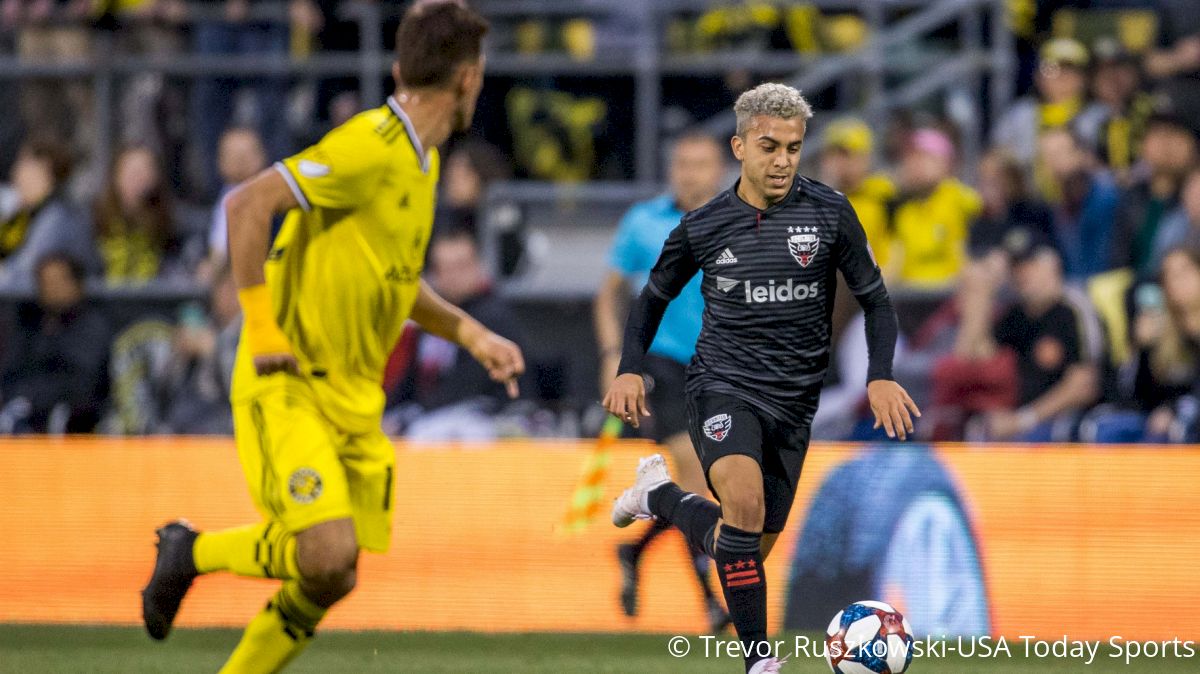
Atlanta United pioneered it, and other clubs have joined. Younger South Americans, even if they’re not outright Miguel Almiron-level superstars, are often good MLS players, so teams are mining that market. FC Dallas signed 22-year-old Chilean Pablo Aranguiz. Andre Horta isn’t South American, but he’s 22 and playing for LAFC. D.C. United acquired 21-year-old Argentine Lucas Rodriguez on loan.
Every player isn’t a hit — Horta is struggling and does not start, and Orlando City’s 20-year-old Josue Colman hasn’t broken through — but many are. I will not leave the “Aranguiz is going to be an elite No. 10” hill. Rodriguez is electric and fits exactly what DCU want to do. Houston’s Alberth Elis and DCU’s Luciano Acosta are two of the most obvious success stories, and both look on the verge of a big European move.
More teams will realize it, even those that still muddle along with early-30s Europeans who can’t do much of anything — looking at you, Colorado. It’s all positive.
Yes, the older European route is still viable
Criticisms of MLS for bringing in aging European superstars have grown outdated — the passage above should tell you all you need to know. Just three of those types of stars remain: Wayne Rooney, Zlatan Ibrahimovic, and Bastian Schweinsteiger, and Rooney, at 33, is not exactly Jaromir Jagr out there.
This is a departure from the days of Steven Gerrard, Andrea Pirlo, and Frank Lampard, in that all three of Rooney, Ibra, and Bastian are legitimately good and productive players. Rooney, obviously, has transformed DCU. Zlatan is the second-best player in the league. Schweinsteiger has done what he can for a disjointed Fire team that keeps playing him at center back. He was really good when he was first signed in 2017.
There are fewer of these aging types of stars, but each is the centerpiece of their team. No team in MLS would (or should) pass up the chance to sign Zlatan or Rooney because they’d rather take a chance on a buy-low, sell-high proposition. These types of players will continue coming to MLS, but teams should be smarter about which to bring in.
Some teams are better at signing DPs than others
This goes without saying, but you’re better off hitting on your top-tier players. Looking at which teams do well and which teams don’t helps identify which teams overcome deficiencies.
So, here is each team’s cast of DPs ranked by tiers. Only their DPs are ranked; nothing about the rest of the team matters. Keep in mind that some clubs will fill a spot (or two) this summer.
Tier 1: LAFC, D.C. United, Seattle Sounders, Toronto FC
This group has top-tier players — Carlos Vela, Rooney, Lodeiro, Alejandro Pozuelo — and fills out with very good squad players. Each team here has three DPs, and each spot is well-used — except, somehow, for LAFC, who haven’t conjured much out of Horta. Vela and Diego Rossi offset Horta enough to keep LA in the top tier.
TFC always have great DPs (Michael Bradley and Jozy Altidore join the new Giovinco) and Seattle run out Raul Ruidiaz and Victor Rodriguez every game in attack. Rodriguez has improved since he first arrived in 2017.
D.C., as mentioned before, have Rooney, Rodriguez, and Paul Arriola, a versatile stud growing into an elite MLS player.
Tier 2: LA Galaxy, Sporting KC, Atlanta United, Minnesota United
I debated elevating the Galaxy and Atlanta to the top tier. Atlanta need Pity Martinez and Ezequiel Barco to get going before they elevate. LA, while Zlatan nearly convinced me, don’t have as much in Jonathan dos Santos and Romain Alessandrini as the teams above do in their second and third DPs.
SKC get in on the merits of Johnny Russell and Felipe Gutierrez, both important parts of a team that still projects as a legitimate contender despite its recent struggles. The odd-fitting Yohan Croizet almost allowed NYCFC or the Fire to slip in ahead of them.
The Loons might be a bit of a surprising entry this high, but Darwin Quintero is fantastic, and Jan Gregus and Angelo Rodriguez are capable.
Tier 3: New York Red Bulls, NYCFC, FC Dallas, Montreal Impact
In spite of Kaku’s antics, the Red Bulls (the first team on the list with only two DPs) check in alongside their New York rival, who could be higher if not for Jesus Medina’s relegation to the bench. FC Dallas went younger, with Aranguiz, Santiago Mosquera, and Bryan Acosta.
Montreal, while they only have two, trot out Ignacio Piatti and Saphir Taider, both elite in their positions. Taider is underrated in general.
Tier 4: Columbus Crew, Houston Dynamo, Portland Timbers, Real Salt Lake, Vancouver Whitecaps, Philadelphia Union, Orlando City
This is the middle of the road group. There some very good players in here — Alberth Elis, Diego Valeri, Alejandro Bedoya, Albert Rusnak — and some lesser talents.
Some of these clubs don’t have the elite players that others do, and others are in wait-and-see mode. The latter is the case for the rebuilding Whitecaps, RSL with forward Sam Johnson, and Orlando City with Nani and Colman.
Tier 5: FC Cincinnati, San Jose Earthquakes, New England Revolution, Colorado Rapids
Only Cincinnati have an argument for being in a higher tier, with Allan Cruz and Fanendo Adi. The other three are cemented in the bottom until they do something about it, or until Carlos Gil transforms into a star out of nowhere.
You need good DPs to win, unless you do really, really well elsewhere. These final five prove it.
Harrison Hamm is a sportswriter who covers American soccer and MLS for FloFC. He also covers sports for FanSided and The Comeback, and has freelanced for the Washington Post.