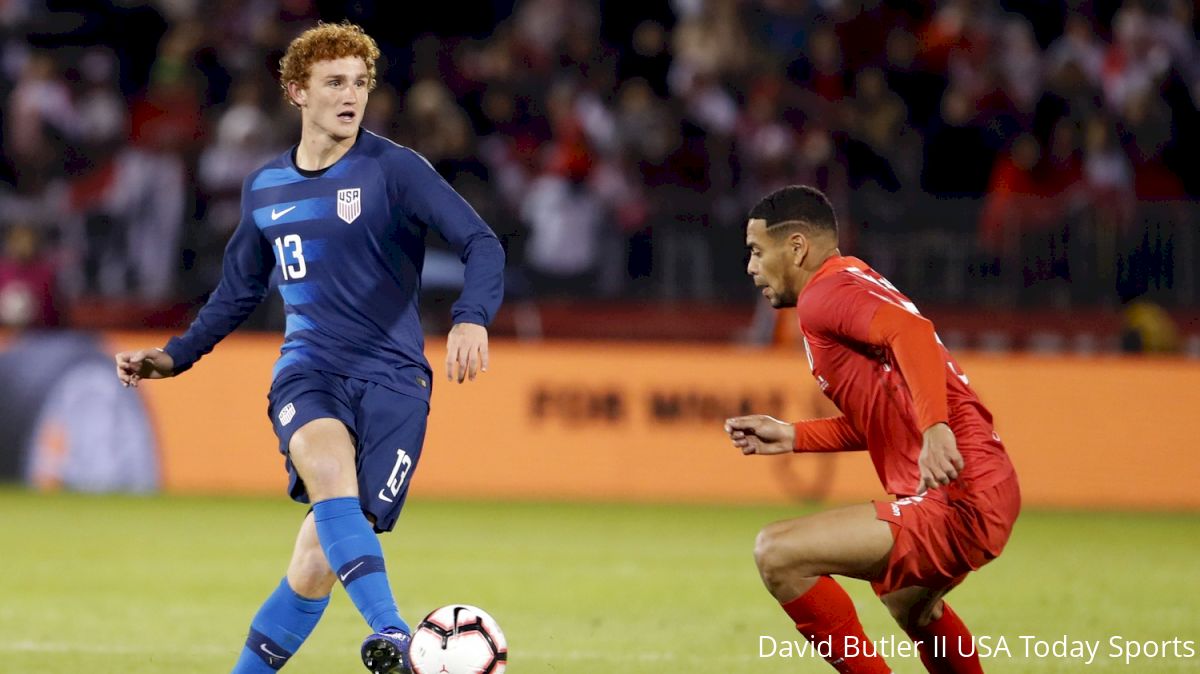
Gyasi Zardes started up top again for the USMNT in their friendly draw with Chile. As is customary, fans whipped out the pitchforks when they saw his name on the lineup graphic. Zardes is considered a below-par international striker, with reason: he lacks the on-ball skills and passing of others in the U.S. attack. A more influential forward could propel this team much farther.
But Gregg Berhalter didn’t have many options. He and Brian Schmetzer appear to be working together to craft a winger out of a revitalized Jordan Morris. Corey Baird often plays up top for Real Salt Lake, but he played out wide against Chile. Christian Ramirez, while U.S. fans seem to rate him highly, is not dissimilar from Zardes in that he won’t seek out the ball or play a role in buildup. Zardes’s pace and field-stretching qualities likely persuaded Berhalter to toss him another start.
At this summer’s Gold Cup, in the U.S.’s first competitive games since 2017, Jozy Altidore should reclaim a starting spot up top. Until Josh Sargent is ready, Altidore is the best striker in the pool; fans’ criticisms of him are mostly senseless. Starting-caliber depth is sparse beyond Altidore, though Tim Weah could emerge as a contender for the No. 9 position, depending on how Berhalter sees him positionally.
The dearth of strikers in the pool is mildly concerning. Zardes and Ramirez, at 27, are not young players with room for development. Altidore is 29. Bobby Wood, still 26, didn’t get a call into the March camp. Jeremy Ebobisse (who looks like the top U-23 option) and Andrija Novakovich could grow into quality options, but Sargent’s development into a difference-maker up top looks like one of the most important storylines for the USMNT in the early part of this cycle.
Having a dominant force up front would make things profoundly easier for the rest of the U.S. attack. When things stagnated against a sleepwalking Ecuador in March’s first friendly, a centerpiece striker would have unlocked new passing lanes for Christian Pulisic and Paul Arriola by dropping off the front line to relieve pressure and play runners through.
Counter-attacking is easier with a hold-up striker. Berhalter’s 2015 Columbus Crew team, which finished a goalkeeper error away from winning MLS Cup, excelled at playing into space through Kei Kamara, who was able to draw center backs from the backline and then slip a ball through to Ethan Finlay or Justin Meram.
Zardes has shown glimpses of similar abilities. He struggled against Ecuador, but rebounded against Chile, producing the exact type of back-to-goal through-ball Berhalter should desire on Pulisic’s gorgeous goal.
Christian Pulisic's 10th USMNT goal was class, but how about that touch from Gyasi Zardes?! ?
— FOX Soccer (@FOXSoccer) March 27, 2019
(? via @USMNT) pic.twitter.com/QGIrmpStjt
Sargent, still 19, will hopefully develop these skills. He’s not a powerful hold-up presence like Altidore and Kamara, but neither is Zardes.
In a system like Berhalter’s, strikers have to be willing to connect play as passers. Zardes is notoriously averse to playing a role in build-up play, a product of the way Berhalter generated tap-ins for his forwards in Columbus without having to involve them in possession. At the international level, the U.S. should expect more from their striker. An active presence up top would help break down a dormant team like Ecuador and aid in finding easy outlets to start attacks against teams like Chile.
Pressing and re-pressing is another major tenet of Berhalter forwards. One of the primary reasons Zardes has played so many minutes in the last couple of months is his familiarity with the way Berhalter wants his forwards to press. There are specific triggers that attackers have to understand to form a coherent press, and Zardes knows those triggers from playing for Berhalter in Columbus. Learning those triggers and then being able to deny meaningful possession on the field are crucial skills.
If Sargent maximizes his potential and learns how to implement what Berhalter wants, it could put the U.S.’s attack over the top.
Harrison Hamm is a sportswriter who covers American soccer and MLS for FloFC. He also covers sports for FanSided and The Comeback, and has freelanced for the Washington Post.