The Making Of Il Generale: Michael Bradley's Stint At Chievo Verona
The Making Of Il Generale: Michael Bradley's Stint At Chievo Verona
Michael Brinkley has been key to the U.S. men's success and we can credit a lot of his development to his time spent with Chievo in Italy.
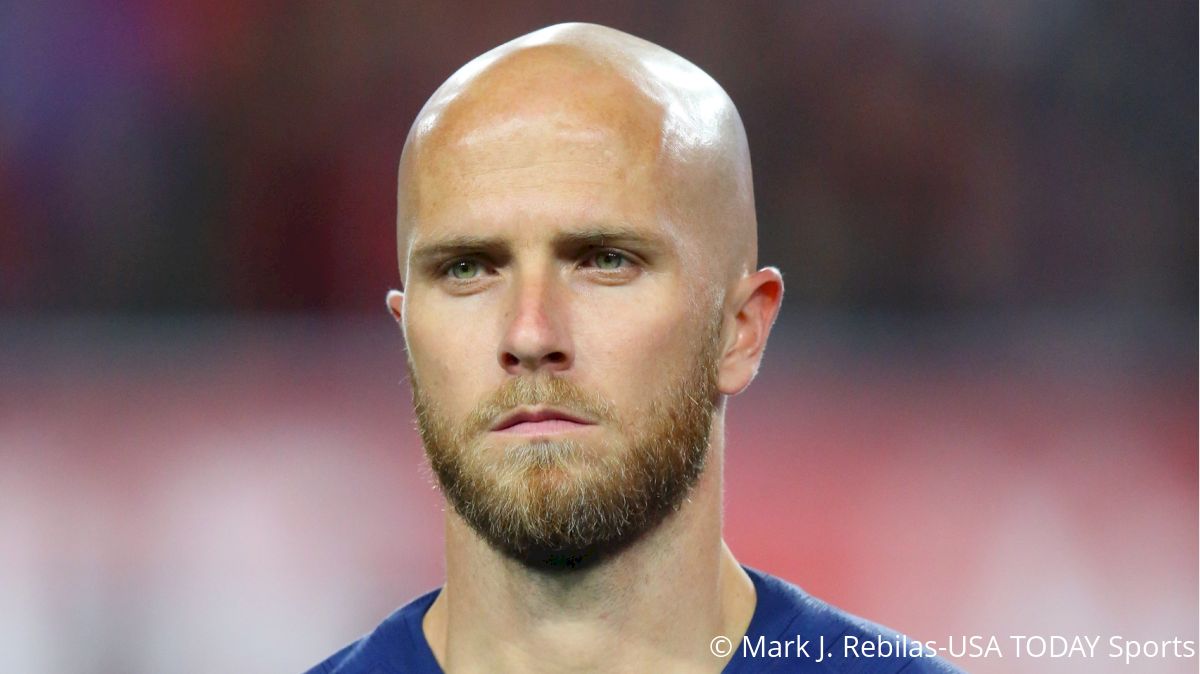
Founded in the first century B.C., the city of Verona, Italy, has been the stage for numerous tales of grandeur over the centuries. The balcony of Shakespeare’s Juliet and ancient Roman ruins pull most visitors, but there was a time when an unassuming American midfielder quietly stitched his own piece into the fabric of Verona at a small club on the edge of the historic city.
Chievo is a neighborhood of around 4,500 inhabitants on the outskirts of Verona and is home to a club who have hit above their weight at times (fourth-place in 2006) and have miraculously escaped relegation on multiple occasions. This feat is quite impressive given the minuscule resources at their disposal. Chievo are backed by bakery product company Paluani and share the Marc’Antonio Bentegodi stadium with crosstown rivals Hellas Verona, who attract a much larger fan base.
When Michael Bradley joined Chievo after an unsuccessful loan spell with Aston Villa, he became just the second American in the modern era to play on the calcio-crazed peninsula, following in the footsteps of U.S. legend Alexi Lalas. According to the former Padova defender, Bradley’s decision to ply his trade in Italy would surely pay dividends.
“Italy is conducive to his type of mentality and approach to the game,” Lalas said. “It’s legendary for its tactical awareness and formations, attention to detail, and I think he got to a place where he was able to think about a game and implement it in a way that’s not only accepted, but revered in a certain sense.”
For a player who had already completed stints in three European nations and whose growth was integral to the success of the U.S. National Team, many onlookers questioned the decision to join a modest Italian club. However, a season in which he appeared in 35 matches, registered over 3,000 minutes and became a club favorite quickly quieted the naysayers.
Bradley watched Seria A as a boy and idolized the likes of Milan’s Demetrio Albertini, a midfielder whose vision, ball-winning ability and tactical knowledge was crucial for both club and country. The move made plenty of sense to Bradley for developing in terms of positional awareness and becoming more defensively sound.
“When you see these kind of players and how important they are for their teams and how valued they are, how appreciated they are by their teammates, by their coaches in this country, I felt that for me it would be a good step in my career to come here,” Bradley said.
Those close to Bradley have long praised his intellect and language skills. He wasted no time in settling into life in northern Italy, conducting interviews and even speaking to local students in Italian after just three months at the club. Navigating life in a new country is often the largest hurdle for professionals, but he and his wife appeared to make a seamless transition.
Growth at the Bentegodi
As Lalas noted, Italy’s Serie A has long been a league known for its emphasis on tactical preparation, and the midfield enforcer’s time at the Bentegodi helped further elevate his game in this area.
“The small Italian teams are convinced that the only way to compete is to tactically be perfect and tactically be prepared for every scenario,” Bradley said concerning play in Italy and the driving philosophy of his own Gialloblu.
Bradley immediately impressed manager Domenico Di Carlo with his work rate, technique and intelligence on the field, and in the blink of an eye he stepped into the backbone of the starting XI.
It was at Chievo when teammate Luca Rigoni was absent due to injury that Bradley really refined his abilities as a regista, a deep-lying playmaker who initiates moves forward from just in front of the back line. Bradley’s propensity to spray the ball around midfield and pick out a final pass, while also providing cover for the defense, reaped benefits for the U.S., evidenced in standout performances against Italy, Scotland and Russia in 2012.
His numbers in 2011-12 demonstrate such success, as he finished second on the team in tackles per game and first in passes attempted (79 percent completion). It’s no mystery why “Captain America” and Il Generale became the nicknames of choice, as Chievo supporters could trust their midfield general to lead them into battle against the giants from Turin, Milan, Rome and Naples.
Bradley’s style of play proved the perfect match for Chievo, whose game plans most often involve frustrating superior opponents while picking out scoring chances on the counter. His workman-like approach within a club devoid of superstars and displays against some of Europe’s best talents did not go unnoticed. A stellar season garnered the interest of clubs around Europe, and after just one year Bradley elected to stay in Italy and join a much larger club in A.S. Roma.
Some have made the argument that Bradley should at least be in the conversation for the best American player of all time. He has traveled north of the age of 30 and U.S. fans are currently engrossed in heated discussions as to whether or not he belongs in Gregg Berhalter’s plans in 2019. Whether or not he features heavily moving forward, there’s no debating the immense role he’s played for the Stars and Stripes, thanks in part to a brief spell when Il Generale became a crowd favorite in a small Italian suburb.
Wesley Davidson is a graduate of the University of Alabama (BA) and the University of Illinois-Urbana Champaign (MA). He currently works in youth soccer in Austin, Texas, and can be found on Twitter.