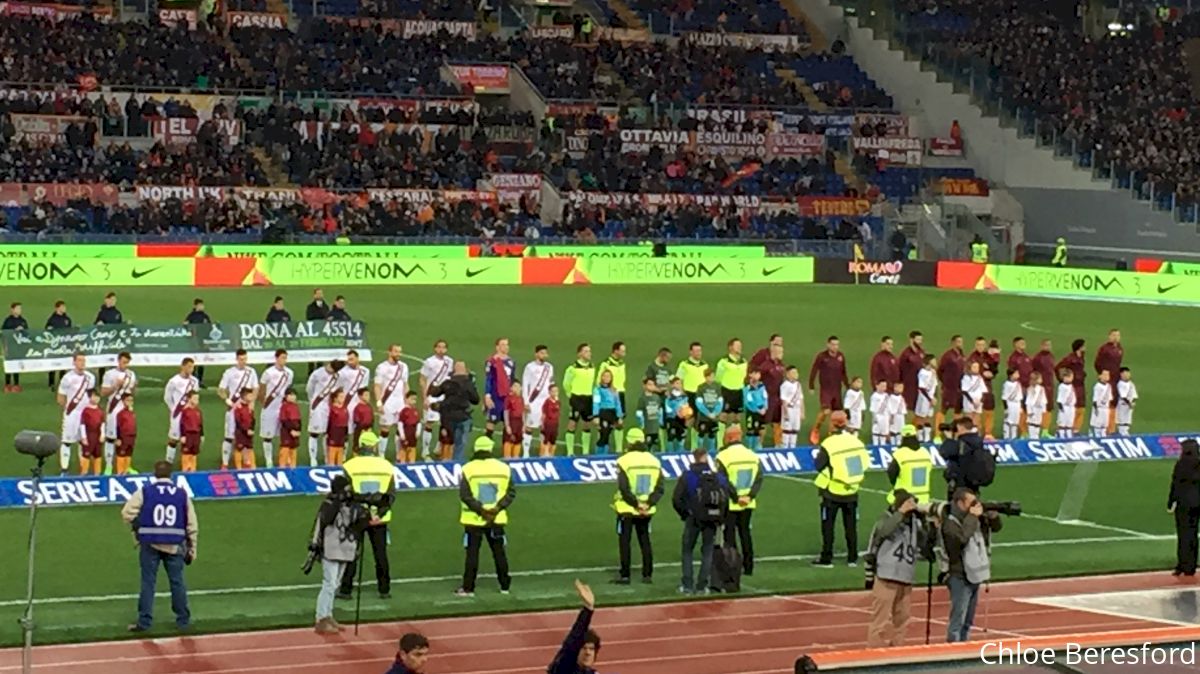
When American James Pallotta became president of AS Roma in August 2012, the contrast between the Serie A club as it was and a typical U.S. brand must’ve been striking. This side last won the Scudetto back in 2001, and on arrival 11 years later the new man in charge found a lack of commercial and digital strategies, a factor that would’ve astounded anyone previously involved in sports in the States.
Of course, Pallotta moved quickly to rectify this problem, but the Giallorossi have finished in second place no fewer than nine times since that elusive last league title, and they still have a way to go before they can mount a credible challenge to Juventus. The Old Lady of Turin has dominated the Italian football landscape, lifting the Serie A trophy in each of the last seven consecutive seasons, and it is no surprise that they too are working on an American-style business model.
Yet Juve had the major advantage of being able to knock down their old Stadio delle Alpi home and rebuild their ultra-modern and – most importantly – club-owned stadium in its place.
Roma do not have that luxury with their Stadio Olimpico however, the venue owned by the Italian Olympic Committee, and red tape at a premium within the ancient capital. Juve’s success in this regard has been a factor in seeing their revenue increase from €272 million in 2013 to €406 million in 2017, keeping them in 10th place in terms of income in world football, according to Deloitte.
A poor showing in the Champions League during 2016-17 caused Roma to earn €171.8 million, dropping out of the top 20 in the latest version of the report. A semifinal appearance in 2017-18 should see them climb back up the rankings in this year’s edition, however.
Taking a look at the previous year’s version of Deloitte underlines the progress being made under Pallotta’s stewardship though, their overall income starting at €116 million per season upon his takeover in 2012, climbing to €218 million in 2017.
This shows growth in all of the areas targeted by the new ownership, including a 16-percent rise in commercial revenue to €35.8 million, along with a 13-percent rise in matchday revenue to €28.4 million. Attendances, too, have risen steadily, aside from a two-season blip in 2015-16 and 2016-17. According to Transfermarkt, figures since the beginning of the 2017-18 campaign have seen Roma heading towards the 40,000 mark, a figure of 37,457 recorded at the end of that season still gradually going up.
Their excellent Twitter, Facebook, and Instagram accounts have also gained well-deserved attention, head of digital and social media Paul Rodgers reporting that the official Twitter account – followed by 330,000 people – had earned 37 million impressions in the first two weeks of October. That period included a week’s international break, and the chief also revealed that their account delivered three of the top 10 biggest tweets by any European club during domestic football’s pause.
For all this growth though, Roma are missing the key piece of the puzzle. Owning their own stadium would allow them to break free of the shackles currently imposed on them, surely giving them the ability to finally turn some of those second-place finishes into first in the future.
“In three years we’re hoping to have a stadium, and that’s the key,” Pallotta told those watching at the MIT Sloan Sports Analytics Conference back in March. “Because we can’t compete with Barcelona on a day-to-day basis when they’re going to have a billion dollars in revenue in a year or two and we’re dealing with €220m.”
Only once this has happened can the real American revolution begin, the president planning multi-sports events such as college football and UFC, as well as music concerts in the new venue, all with the aim of raising enough revenue in order that Roma can properly compete.
While this is delayed, the Giallorossi will continue to build, albeit with their hands behind their backs, waiting for the day in which they are ready to truly challenge for both Serie A and the Champions League.
Chloe Beresford specializes in Serie A for a number of outlets and can be found on Twitter and on Facebook via her page CalcioByChloe.